
Price range: $60.00 through $1,147.50
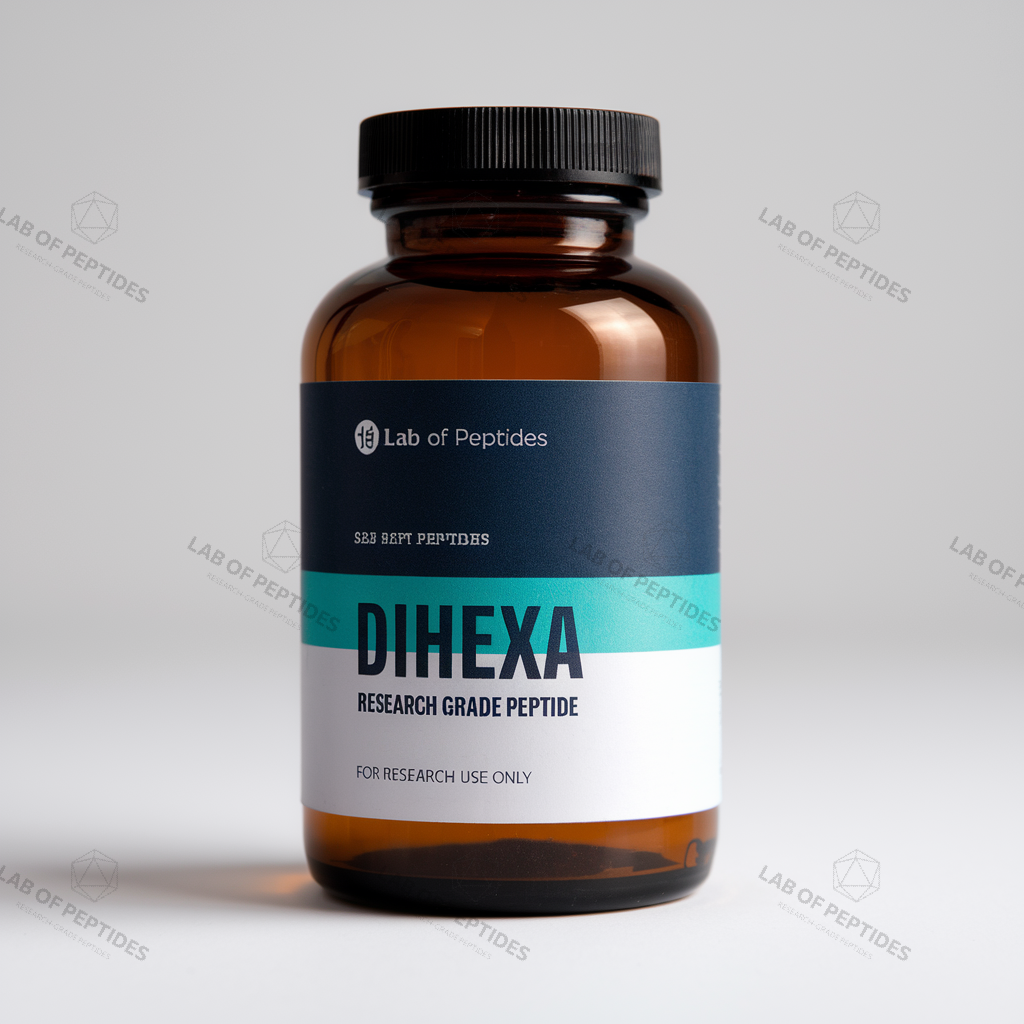
Dihexa is a research-grade compound positioned for hgf/met agonist research and related laboratory investigation. Reported molecular weight: 576. Available configurations include 10mg, 20mg, 10mg Kit (10 vials), 20mg Kit (10 vials). Purity is listed at ≥99% HPLC verified. For research use only. Not for human consumption.
Overview
Dihexa is a research-grade peptide compound that supports laboratory investigation into the pathways outlined in current literature. The focus keyword, buy Dihexa research peptide, is integrated here because investigators often search by compound name, format, and analytical standard when comparing suppliers.
Dihexa is a small peptide derived from angiotensin IV research at Washington State University. Research demonstrates potent HGF and MET system activation and synaptogenesis induction in hippocampal cultures. Primary applications include cognitive decline models, dementia research, and synaptic plasticity studies. Molecular weight: 576.8 Da.
Within the Lab of Peptides catalogue, Dihexa is grouped alongside Semax and Selank and anchored within Cognitive Neurological peptides. This helps researchers move from compound-specific review into broader pathway comparison without leaving the core research archive.
Research Background
Dihexa entered the literature because its molecular design aligned with a defined biological question. Early programmes, institutional studies, and preclinical model work examined how the compound class might influence receptor signalling, cellular adaptation, or tissue-level response patterns under controlled conditions.
Research background matters because peptide handling, sequence stability, and route-specific formulation all affect interpretation. For that reason, technical sourcing decisions often include purity review, storage validation, and protocol matching to the underlying model rather than broad generalisation.
Researchers comparing Dihexa with Semax often focus on mechanism contrast, assay endpoints, and formulation constraints. That is particularly relevant when different compounds occupy adjacent commercial keyword clusters but operate through different receptor or transcriptional pathways.
Mechanism of Action (Research Context)
Dihexa research generally centres on how the compound interacts with a specific receptor, pathway, or molecular target. Dihexa is a small peptide derived from angiotensin IV research at Washington State University. Research demonstrates potent HGF and MET system activation and synaptogenesis induction in hippocampal cultures. Primary applications include cognitive decline models, dementia research, and synaptic plasticity studies. Molecular weight: 576.8 Da.
Studies suggest that mechanistic interpretation is strongest when exposure time, formulation state, and control selection are kept constant. In vitro studies show that downstream markers can vary sharply across cell type and tissue context, which is why reproducible sourcing and storage matter at the procurement stage.
Data indicates that investigators using Dihexa in the same research program as Semax or Selank often do so to compare signalling breadth, tissue selectivity, or pathway overlap. These links support internal navigation for compound comparison rather than consumer-style recommendation.
Research Applications
- Dihexa for sale pathway mapping in controlled research models
- Receptor or signalling cascade comparison against adjacent peptide compounds
- Formulation and storage-dependent stability assessment in assay workflows
- In vitro and in vivo experimental design requiring 99%+ HPLC-verified material
- Category-level review using linked reference compounds and related research posts
Compound Specifications
| Molecular Weight | 576 |
| Sequence / Formula | See technical research context |
| Appearance | White lyophilized powder |
| Purity | ≥99% (HPLC verified) |
| Storage | -20°C protect from light |
| Format | Lyophilized powder in sterile vial |
Quality Assurance
Certificate of Analysis (COA): Each batch of peptides supplied by Lab of Peptides is independently verified by third-party analytical laboratories. COA documents confirming 99%+ purity via HPLC analysis are available upon request. Contact our team at research@labofpeptides.com to request the COA for any specific product batch. Each batch is aligned to third-party analytical review, and Lab of Peptides maintains batch-level documentation practices to support researchers who require confirmation before beginning a new protocol cycle.
Research Use Only Disclaimer: For Research Use Only. Not for Human Consumption. Not for Diagnostic or Therapeutic Use. This product has not been evaluated by the Food and Drug Administration. Intended exclusively for in vitro and in vivo scientific research by qualified professionals.
Frequently Asked Questions
Dihexa synaptogenesis research peptide for sale USA
Dihexa is used in research to study mechanism, signalling behaviour, and model-specific biological response under controlled laboratory conditions. Research framing remains essential because this catalogue is intended for scientific investigation only.
How is Dihexa supplied by Lab of Peptides?
Dihexa is supplied in lyophilized powder in sterile vial with third-party purity verification available through batch-level documentation. Related compounds such as Semax and Selank can also be reviewed for protocol planning.
best nootropic peptide for Alzheimer research
The reported molecular weight for Dihexa is 576, based on the research context provided for this catalogue entry.
Is Dihexa approved for human use?
Lab of Peptides supplies Dihexa exclusively for in vitro and in vivo scientific research. This compound is not approved by the FDA for human use and is not intended for human consumption or self-administration. For research use only.
| Dosage | 10mg, 20mg, 10mg Kit (10 vials), 20mg Kit (10 vials) |
|---|
Certificate of Analysis (COA): Each batch of peptides supplied by Lab of Peptides is independently verified by third-party analytical laboratories. COA documents confirming 99%+ purity via HPLC analysis are available upon request. Contact our team at research@labofpeptides.com to request the COA for any specific product batch.
Batch-specific laboratory documentation is available upon request if a PDF has not yet been attached to this product record.
Research Use Only Disclaimer: For Research Use Only. Not for Human Consumption. Not intended to diagnose, treat, cure, or prevent any disease.
Be the first to review “Dihexa”
Related products

Cognitive and Neurological

Cognitive and Neurological

Cognitive and Neurological

Cognitive and Neurological
Reviews
There are no reviews yet.